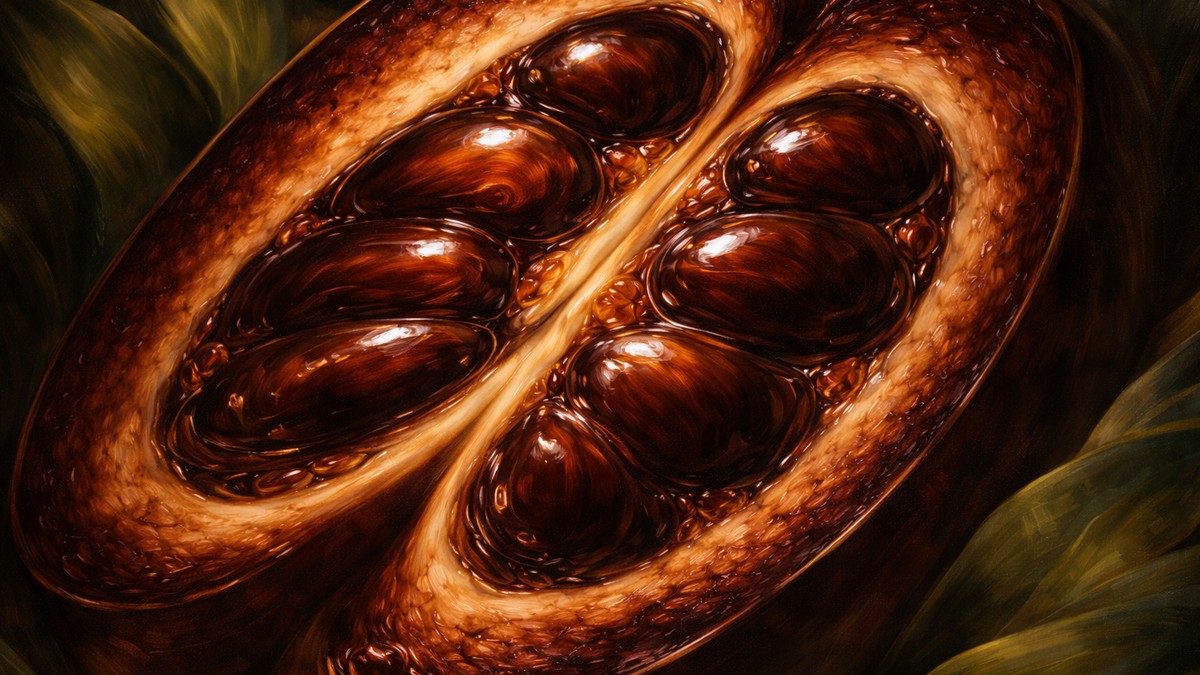
If you have never seen it before, borojó looks almost invented: a dark, thick, aromatic pulp, a deep brown color when ripe, and a texture that feels closer to a concentrate than a casual snack fruit.
That intensity explains why it shows up so often as a drink, pulp, preserve, or dessert base rather than something people casually slice into wedges. FAO reporting on borojó’s trade and community use describes it as part of the staple diet of Afro-Colombian and Indigenous communities in the Colombian Pacific rainforests, and lists uses such as juice, marmalade, ice cream, and jelly.[4]
The quick read: borojó is not famous because it is mild. It is famous because it is dense, tart-sweet, aromatic, and easy to turn into something restorative, filling, or ceremonial-feeling.